They Miss New Revenue Models
Logistics optimisation engines, pricing services, or identity verification exposed as APIs can create new revenue. Technology investment shifts from cost centre to revenue-generating product.

APIs are no longer technical details — they are strategic assets. Access creates value like ownership — yet many lose advantage unknowingly.
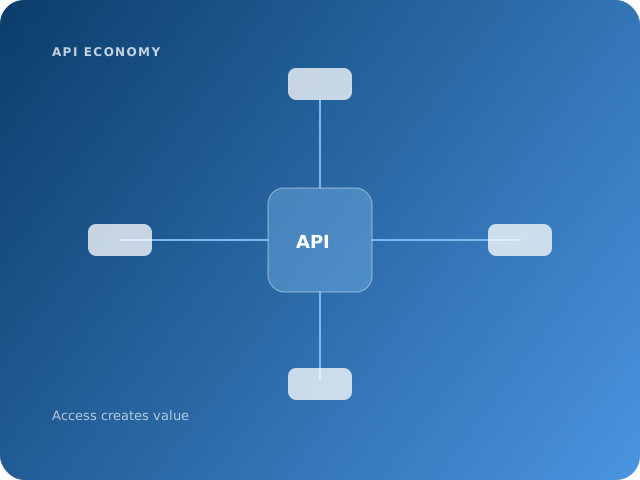
When digital transformation is mentioned, most organisations think of new software — ERP, CRM, mobile apps, AI solutions.
Yet a much larger transformation is happening in the invisible layer of the digital world. Its name: the API Economy.
The world's fastest-growing companies share a trait: they do not just sell their own products — they open their capabilities, data, and services for others to use. They build ecosystems, not just products. And APIs sit at the centre of this shift.
An API (Application Programming Interface) is a standard connection mechanism that enables different systems to communicate securely. The technical definition is simple — the business impact is far greater.
APIs do not just connect systems — they create new business models, new revenue streams, and new partnerships.
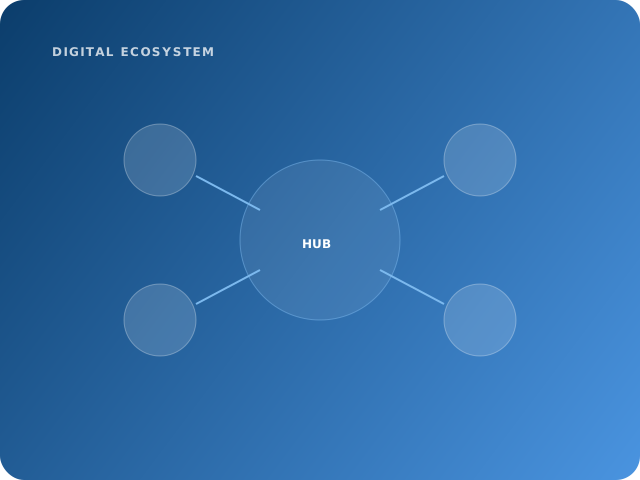
The API Economy means companies opening their digital capabilities for other companies to use — creating new value.
Payment infrastructure, logistics networks, identity verification, pricing engines, route optimisation — all can be used by other companies. The organisation serves not just its own customers — but the entire ecosystem.
AI runs on data — but when data is scattered across systems, AI stays limited. The unsung heroes of AI transformation are APIs.
CRM, ERP, operations apps, customer platforms, and AI services can meet on a shared data flow. An organisation without an API strategy inevitably has an incomplete AI strategy.
Many organisations still see APIs only as integration tools. This approach causes serious missed opportunities.
Logistics optimisation engines, pricing services, or identity verification exposed as APIs can create new revenue. Technology investment shifts from cost centre to revenue-generating product.
Winners in the digital age build ecosystems. When services are used by other platforms, growth compounds. API-focused organisations create value from others' growth too.
When integration takes weeks or months, growth slows. API-based architectures onboard new partners in days — even hours.
Successful organisations manage APIs as business products — not technical outputs:
A growing global concept: converting APIs into revenue models. This approach drives growth for many of today's leading technology companies.
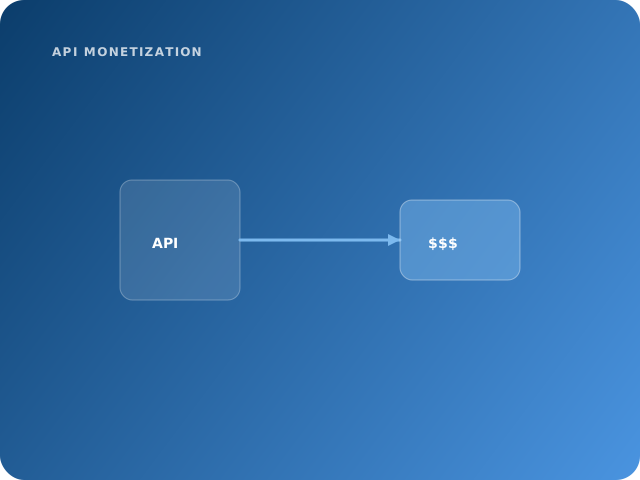
In the early days of digital transformation, companies competed by buying software. Today the rules are changing — what matters is not which systems you use, but how much value they offer to the outside world.
Tomorrow's winners will not just collect data and use software — they will share capabilities, build ecosystems, and turn digital services into revenue.
In the digital age, the greatest value comes not from building walls — but from opening the right doors.
Yes — APIs are managed as strategic assets.
No — APIs are still seen only as technical integration tools.
Share your digital capabilities — let us build your API economy roadmap together.