Yektasoft
Blog 11.06.2025 Yektasoft Engineering 12 min read

The Biggest Barrier to Digital Transformation Is Not Technology — It Is Data Fragmentation

Despite millions spent on technology, many digital transformation projects fail to deliver expected value. The problem is not technology — it is disconnected data.

The Biggest Barrier to Digital Transformation Is Not Technology — It Is Data Fragmentation

Companies today face unprecedented pressure to digitally transform.

AI investments, ERP projects, CRM systems, cloud technologies, mobile apps, and analytics platforms dominate every agenda. Leaders across industries seek ways to work more efficiently, decide faster, and stay ahead of the competition.

Yet a striking reality emerges:

Despite millions spent on technology, many digital transformation projects fail to deliver expected business value.

So where is the problem?

It is usually not in the technology.

It is in the fact that a company's data lives in disconnected silos.

Because the real fuel of digital transformation is not technology — it is data.

And when data is fragmented, even the most powerful technology cannot deliver the expected outcome.
Technology is a multiplier. Combined with the right data, it can multiply organisational performance. Combined with wrong or fragmented data, it only accelerates existing chaos.
Digitising a bad process only produces a faster bad process.

Why Does Digital Transformation Fail to Deliver?

Many organisations see digital transformation as buying new software.

A new ERP is deployed. CRM is replaced. Mobile apps are built. AI projects are launched.

Yet within months, the same phrases emerge:

Most organisations then blame the technology. Yet the problem is usually not the technology itself — it is the data structure that feeds it.

"We cannot access the data we need."
"Reports do not match."
"Departments report different numbers."
"Leadership cannot see the right data."

What Are Data Silos?

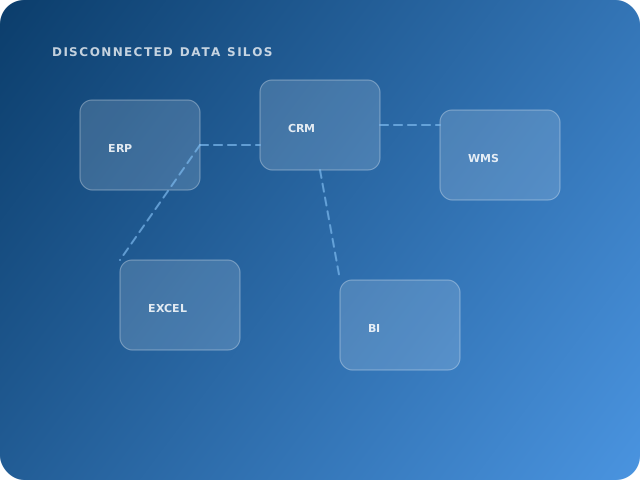
Data silos occur when information is stored across different systems that cannot communicate with each other.

Each system works in isolation. Systems do not talk to each other.

Dozens of data sources emerge, yet no shared reality forms. Data lives disconnected. Departments appear to work for the same company, yet operate in different worlds.

  • Sales uses CRM.
  • Finance uses ERP.
  • HR uses a different platform.
  • Operations works with Excel files.
  • Leadership relies on different reporting tools.
What Are Data Silos?

The Business Cost of Data Silos

Data silos are not just a technical problem. They are a strategic issue that directly affects business outcomes.

Decision-Making Slows Down

Leaders need the right information to make the right decisions. When different systems hold different data, decision-making slows. In a meeting, sales may quote one number while finance quotes another. Time is spent figuring out which number is correct instead of analysing it.

Operational Inefficiency Grows

Many employees spend a significant part of their day collecting data. Excel files are merged, reports are prepared manually, information is pulled from different systems. Yet employees should spend their energy creating value — not moving data.

Customer Experience Suffers

Customers do not care that departments use separate systems. They believe they deal with one organisation. When systems are not integrated, the customer experience fragments. If a customer reports an issue from the mobile app and the call centre agent is unaware, the same information must be requested again — eroding trust.

AI Projects Fail

Many organisations are investing in AI. Yet AI success depends directly on data quality. If data is incomplete, incorrect, or fragmented, the outputs will be wrong too. AI transformation must come after data transformation.

Garbage In, Garbage Out. If garbage data goes in, garbage results come out.

— A classic principle in technology

Where Does Real Digital Transformation Begin?

Successful organisations do not start transformation by buying technology. They address data structure first. They seek answers to these questions:

  • Which systems hold our data?
  • How many copies of the same data exist?
  • Which data is considered authoritative?
  • Can systems communicate with each other?
  • Can leadership make decisions from the same data?

Technology investments made without answering these questions rarely meet expectations.

Building a Single Source of Truth

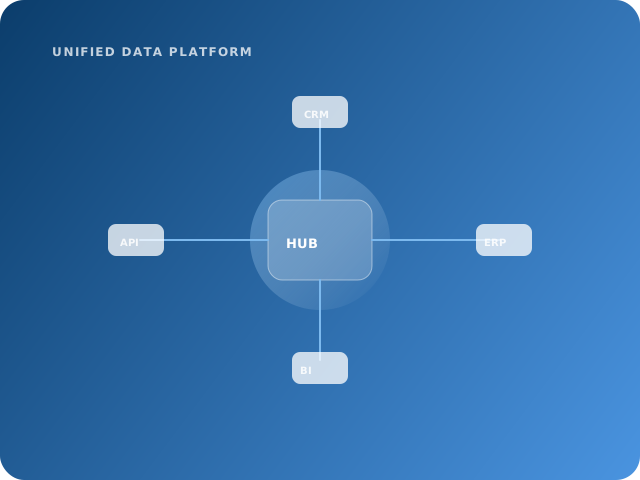
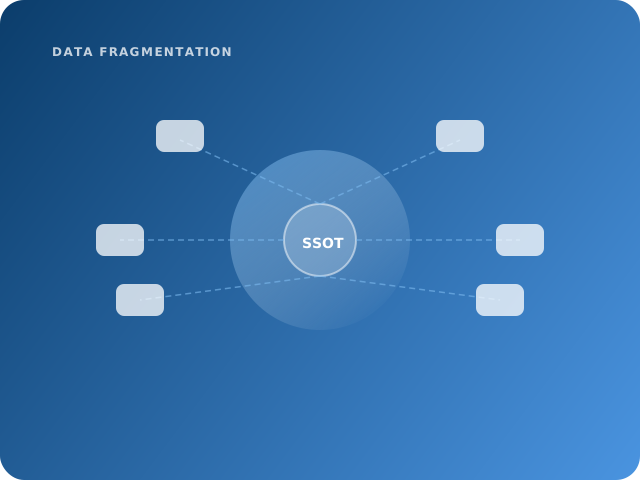
Successful digital transformation projects share one trait: they establish a single source of truth across the organisation. This approach is known as "Single Source of Truth".

The goal is for sales, finance, operations, and leadership to look at the same data.

Everyone sees the same numbers. Decisions are made using data — not debating which data is correct.

  • Data Warehouses
  • Data Lakes
  • Enterprise integration platforms
  • API-based architectures
  • Central reporting systems
Building a Single Source of Truth

Integration Capability Is a Core Criterion for Next-Gen Organisations

The first question for every new software purchase should be: "How will this system talk to our existing systems?"

Integration capability should be evaluated before feature lists.

Systems that operate in isolation eventually create new data islands.

The goal of digital transformation is not to create new silos — but to eliminate existing ones. API-enabled, data-sharing, integration-ready systems should be preferred.

Integration Capability Is a Core Criterion for Next-Gen Organisations

Conclusion: The Foundation of Digital Transformation Is Data, Not Software

Digital transformation does not begin by buying new technology. It begins when an organisation can make sense of its data.

Many organisations no longer lack technology. Yet they continue to suffer from data integrity problems — and therefore miss expected efficiency gains.

AI, reporting systems, decision support, and automation all need the same thing: accurate, current, integrated data.

If your data does not speak, your systems cannot speak. If your systems cannot speak, leaders cannot decide correctly. And when leaders cannot decide correctly, digital transformation remains an expensive technology investment.

The first question on the digital transformation journey should not be "Which new software should we buy?" but "Can our existing data truly understand each other?"

What do you think is the biggest digital transformation barrier in your organisation?

A lack of technology?

Or systems and data living unaware of each other?

Let's assess your data integrity together

Share your current systems and data flows — let us design your unified digital architecture together.

Let's Talk