Yektasoft
Blog 06.07.2025 Yektasoft Engineering 10 min read

How Many Tools You Use Does Not Matter — Whether They Talk to Each Other Does

Each department having its own software is fine. The real question: can these systems talk to each other?

How Many Tools You Use Does Not Matter — Whether They Talk to Each Other Does

In recent years, the number of software tools businesses use has grown rapidly.

Companies once ran on a handful of core applications; today nearly every department has its own specialised tools.

Sales teams use CRM. Marketing works with campaign and customer behaviour platforms. Finance manages ERP and accounting systems. HR uses different solutions. Operations relies on process-specific tools.

This is not necessarily bad. Each department chooses the technology best suited to its work.

But a critical question arises:

Can these systems talk to each other?

Because what determines digital transformation success is not how many tools you use — but how well they work together.
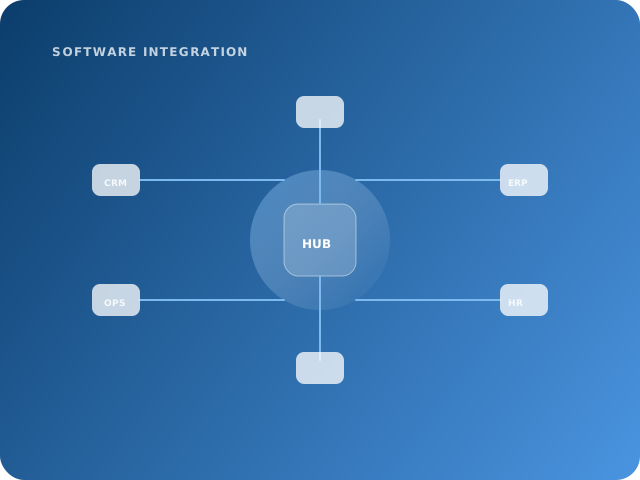
What determines digital transformation success is not software count — but the ability of those systems to work together.

The Hidden Problem of Modern Companies

Over the years, organisations deploy new software to meet different needs. Each investment makes sense on its own. Each system performs its role well.

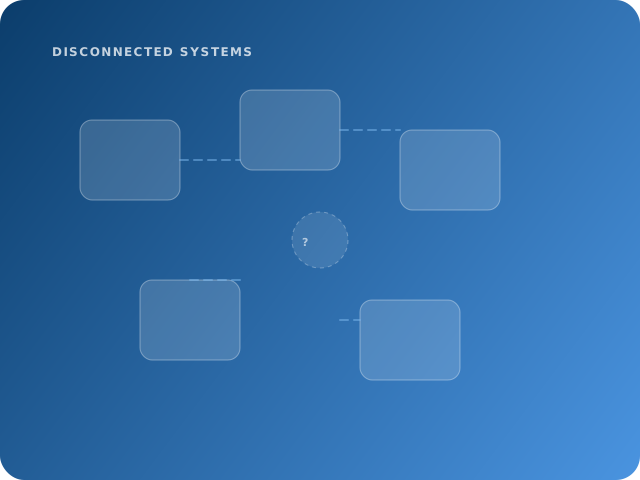
Yet over time, data islands emerge. Sales holds its data. Finance holds its data. Operations holds its data. HR holds its data.

The organisation ends up with plenty of data — but no shared meaning. The company grows. Software count rises. Yet information flow slows.

This is the core problem many digital transformation projects face.

The Hidden Problem of Modern Companies

The New Key to Digital Transformation: Integration

Organisations once focused on choosing the right software. Today the question has changed.

The question to ask is: "How will this system work with our other systems?"

Because success today comes not from a single tool's power — but from systems' ability to work together.

Competitive advantage depends less on which tools you use, and more on the ecosystem they form.

The New Key to Digital Transformation: Integration

What Happens When Systems Do Not Talk?

The effects are often felt by leaders before technical teams.

The Same Data Is Entered Multiple Times

Customer data is entered in sales, transferred to operations, re-entered in finance. Sometimes the same data exists in three or four systems. Different information emerges in different systems — and inconsistency follows.

Employees Move Data Instead of Creating Value

Many employees spend much of their day moving information between systems. Excel files are prepared, reports merged, manual checks performed. Technology exists to make work easier — not to turn employees into digital couriers.

Leadership Loses Real-Time Visibility

When data lives in different systems, real-time visibility disappears. Departments produce their own reports, reports are merged, checks performed — and results often reach leadership days later. In today's competitive environment, deciding on days-old data is a serious disadvantage.

Customer Experience Fragments

Customers believe they deal with one organisation. When systems are not integrated, experience fragments. Information given to sales is invisible to support; support notes never reach operations; operations work is invisible to finance. Customers repeat the same information — eroding trust.

We Must Think API-First

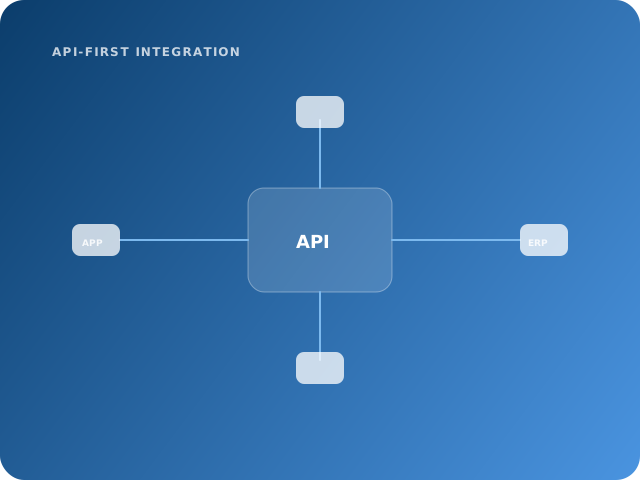
When buying new software, integration capability is one of the most important criteria. These answers matter as much as the feature list. Closed systems create new data silos over time. Open, integrated systems unlock digital transformation.

  • Does it offer API support?
  • Can it share data?
  • Can it integrate with existing systems?
  • Will it work with future systems?

The Goal Is Not More Software — But Smarter Architecture

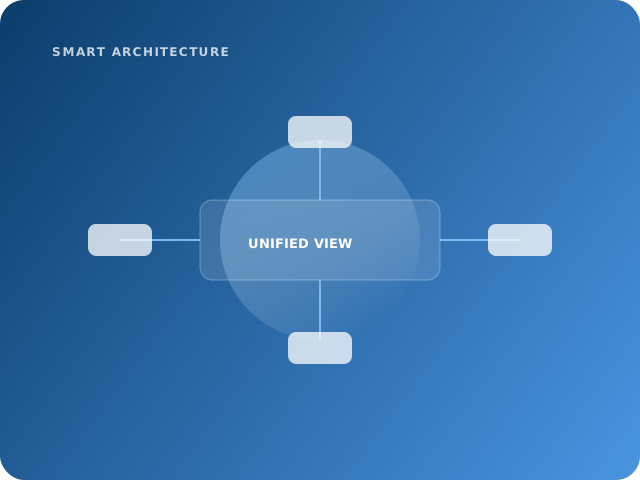
Successful companies now compete on integration maturity — not software count. What matters is not how many systems you use, but how they work together.

When sales, finance, operations, and leadership see the same data; when information reaches the right person at the right time; when decisions rely on real-time data — digital transformation truly starts delivering value.

  • Sales, finance, and operations see the same data
  • Information reaches the right person at the right time
  • Decisions rely on real-time data
The Goal Is Not More Software — But Smarter Architecture

Conclusion

On the digital transformation journey, many organisations focus on buying new software. Yet what is often needed is not a new system — but strong integration bridges between existing ones.

The problem is usually not a lack of software. It is existing software working unaware of each other.

Today's successful organisations are not those with the most tools — but those that unite data, processes, and systems under a shared architecture.

When planning your next investment, ask: "Do we really need new software?" Or "Can we create far greater value by connecting our existing systems?"

What do you think is the biggest problem in your organisation?

Insufficient software?

Or dozens of systems working unaware of each other?

Let's connect your systems

Share your current software landscape — let us design your integration architecture together.

Let's Talk